Search engines have become a vital part of our daily lives. Whether you are searching for a recipe, looking to buy a product, exploring a tutorial, or checking the latest news, search engines help you find the most relevant information in seconds.
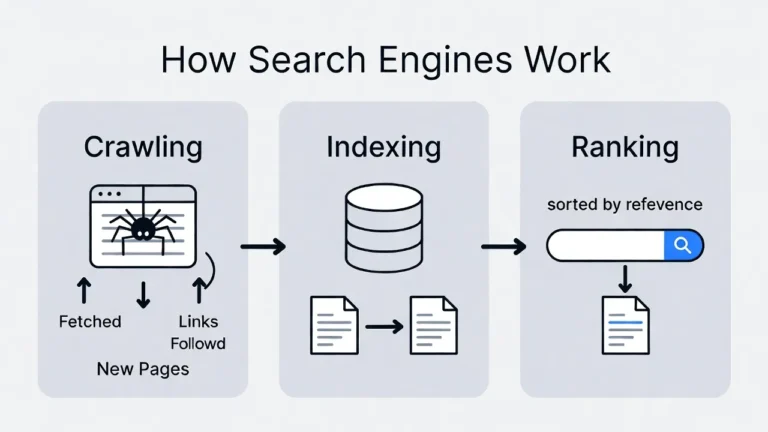
Understanding search engine basics is essential if you want to know how websites appear in search results. A search engine works by crawling the web, indexing pages, and ranking them based on relevance and quality. Popular search engines like Google use advanced algorithms to determine which pages best match your query.
In this guide, we will explain search engine basics in a simple, beginner-friendly way. You will learn what a search engine is, how it crawls and indexes content, and how it ranks websites to provide accurate results.
Whether you are new to SEO or want to understand how search engines find and rank web pages, learning search engine basics will give you a strong foundation for optimizing your website and improving your online visibility.
Search Engine Basics Complete Beginner Guide
What Are Search Engines?
Search engines are online tools that help users find information on the internet quickly and efficiently. They are the backbone of the web, guiding people to relevant websites, articles, videos, and products based on their search queries. Understanding search engine basics begins with knowing what these powerful tools are and how they function.
Definition of a Search Engine
A search engine is a software system designed to search the internet for content that matches a user’s query. It collects, organizes, and ranks information from billions of web pages to deliver the most relevant results. Examples include Google, Bing, and Yahoo. Learning the search engine basics helps you understand how these platforms decide which websites appear first in search results.
Purpose of Search Engines
The main purpose of search engines is to connect users with the information they are looking for as quickly and accurately as possible. They help people discover websites, products, news, tutorials, and more. By understanding search engine basics, you can better optimize your website, ensuring it reaches the right audience and ranks higher in search results.
History of Search Engines
To fully understand search engine basics, it helps to look at how search engines have evolved over time. From the first attempts to index the web to today’s AI-driven search platforms, search engines have transformed the way we access information online.
Early Search Engines in the 1990s
The 1990s marked the beginning of the search engine era. Early search engines like AltaVista, Lycos, and Yahoo Directory helped users find web pages in an increasingly large internet. These early tools laid the foundation for modern search by introducing indexing, keyword matching, and basic ranking systems—core concepts in search engine basics.
Evolution of Google Search Engine
Google revolutionized search by introducing the PageRank algorithm in 1998, which ranked pages based on relevance and authority. Over time, Google has continuously improved its algorithms, incorporating AI, machine learning, and user experience metrics. Understanding Google’s evolution is essential in search engine basics, as it dominates global search traffic.
Modern Search Engine Technology
Today’s search engines use advanced technologies, including natural language processing, semantic search, voice search, and AI-powered ranking systems. These innovations make search faster, smarter, and more personalized than ever before. Learning modern search engine technology is a critical step in mastering search engine basics.
Major Milestones in Search Engine History
Key milestones in search engine history include the launch of Google in 1998, the introduction of mobile-first indexing, the rise of AI-based features like RankBrain, and the inclusion of Core Web Vitals in ranking factors. Each milestone has shaped the way we understand and interact with the web, making them important in search engine basics.
Impact of Search Engines on Internet Growth
Search engines have played a pivotal role in the growth of the internet. They have made information accessible, connected users with businesses, and fueled the rise of digital marketing. Understanding their impact helps contextualize search engine basics and highlights why optimizing for search is crucial in today’s digital landscape.
Popular Search Engines
When learning search engine basics, it’s important to know the most commonly used search engines around the world. These platforms help billions of people find information online every day. Each search engine has its own way of crawling, indexing, and ranking websites.
- Google – The most widely used search engine globally, Google dominates the market with over 90% of search traffic. It is known for its advanced algorithms, accurate search results, and continuous updates.
- Bing – Developed by Microsoft, Bing is the second most popular search engine. It offers features like image search, video search, and rewards programs for users.
- Yahoo – Although less dominant than Google, Yahoo still remains a popular choice for email, news, and search services. Its search results are powered by Bing.
- DuckDuckGo – Known for its strong focus on privacy, DuckDuckGo does not track user activity. It has gained popularity among users who prefer anonymous searches.
- Baidu – The leading search engine in China, Baidu dominates the Chinese market and provides search, maps, and other services similar to Google.
Understanding these popular search engines is a key part of search engine basics, especially if you want to optimize your website for different platforms and reach a wider audience.
How Search Engines Work (Step-by-Step)
Crawling Explained
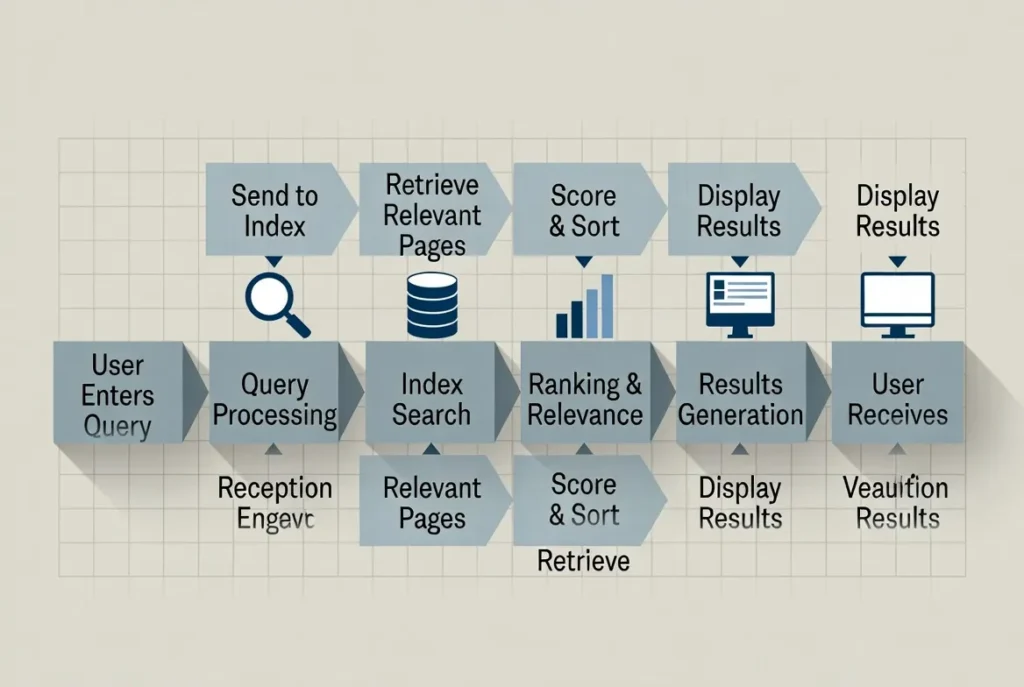
Crawling is the process search engines use to discover new and updated web pages. Automated programs called crawlers or bots scan the internet, follow links, and gather information about your content.
Indexing Explained
Indexing is when the information collected during crawling is organized and stored in the search engine’s database. Only indexed pages can appear in search results, making indexing a critical part of search engine basics.
Ranking Explained
Ranking is the process of determining which web pages appear at the top of search results for a particular query. Search engines use algorithms to evaluate relevance, quality, and user experience, deciding the order of results.
What Is Crawling in Search Engines?
What Are Crawlers and Bots
Crawlers, also called spiders or bots, are automated programs that scan web pages and follow links to discover new content. Googlebot is the most famous example. Understanding crawlers is key to search engine basics, as they are the first step in making your website visible.
How Crawling Works
Crawlers start with a list of known URLs and follow links to discover new pages. They analyze content, keywords, meta tags, and internal links to understand your website structure.
How to Optimize for Crawling
To help crawlers effectively scan your website:
- Use a clean site structure and logical navigation
- Submit an XML sitemap to search engines
- Ensure robots.txt is correctly configured
- Avoid broken links and duplicate content
What Is Indexing in Search Engines?
What Is Search Engine Index
The search engine index is a massive database of all web pages that crawlers have discovered and deemed valuable. Indexed pages are eligible to appear in search results.
How Indexing Works
After crawling, search engines analyze your content for relevance, keywords, and quality, then store it in the index. Pages with well-structured content, proper metadata, and optimized headings are indexed more efficiently.
Why Pages Are Not Indexed
Common reasons for pages not being indexed include:
- Blocked by robots.txt or meta tags
- Duplicate or thin content
- Poor site structure or navigation
- Technical issues like slow loading or broken links
What Is Ranking in Search Engines?
How Search Engine Ranking Works
Ranking determines the order in which indexed pages appear in search results. Search engines evaluate hundreds of factors to provide the most relevant and useful content for users.
Google Ranking Factors
Google uses a combination of on-page, off-page, and technical factors to rank pages. These factors are central to understanding search engine basics.
How to Improve Rankings
To improve rankings:
- Optimize content for relevance and search intent
- Earn high-quality backlinks
- Improve website speed and user experience
- Ensure mobile-friendliness
- Follow EEAT principles (Experience, Expertise, Authoritativeness, Trustworthiness)
Key Google Ranking Factors (Beginner-Friendly Explanation)
Content Relevance
Content must match what users are searching for. Use targeted keywords naturally and answer users’ questions thoroughly.
Search Intent
Understanding whether the user wants information, a product, or a service helps tailor content to meet their needs.
Backlinks and Authority
High-quality backlinks from reputable websites signal trust and authority to search engines.
Page Speed and User Experience
Faster loading pages and intuitive navigation improve user satisfaction and rankings.
Mobile Friendliness
With most users searching on mobile devices, responsive design is critical for higher rankings.
EEAT (Experience, Expertise, Authoritativeness, Trustworthiness)
Google values content that demonstrates credibility and expertise. Show experience, author qualifications, authority in your niche, and trustworthiness to improve rankings.
Types of Search Engines
Understanding search engine basics also means knowing that not all search engines work the same way. There are different types of search engines, each designed to find and deliver information in unique ways. Here’s a breakdown of the main types:
Crawler-Based Search Engines
Crawler-based search engines, also known as spider-based search engines, use automated programs called crawlers or spiders to scan the internet. These crawlers visit web pages, follow links, and collect information to create an index. Google is the most well-known example of a crawler-based search engine. Learning about these search engines is essential for understanding how websites are discovered and ranked.
Directory-Based Search Engines
Directory-based search engines organize websites into categories and subcategories, often reviewed by humans. Users can browse or search within these directories to find information. Examples include the Open Directory Project (DMOZ). Directory-based search engines emphasize organization and human curation as part of search engine basics.
Hybrid Search Engines
Hybrid search engines combine crawler-based and directory-based approaches. They use automated crawling to gather data but also incorporate human-reviewed directories to improve accuracy and relevance. Yahoo is an example of a hybrid search engine. Understanding hybrid search engines helps in grasping how search results can be influenced by both algorithms and human curation.
Specialized Search Engines
Specialized search engines focus on a specific type of content or industry. For example, PubMed searches scientific and medical articles, while JSTOR indexes academic papers. These search engines are optimized for niche audiences and specific types of queries. Learning about specialized search engines is part of search engine basics, especially for targeting specialized content.
Vertical Search Engines
Vertical search engines focus on a particular vertical or segment, such as images, videos, shopping, or travel. Examples include YouTube for videos, Zillow for real estate, and Kayak for travel. Vertical search engines provide highly relevant results within their niche, making them an important concept in search engine basics.
How Users Interact With Search Engines
Learning search engine basics isn’t complete without understanding how users interact with search engines. From typing queries to viewing results, knowing user behavior can help you optimize content and improve website visibility.
Search Query Explained
A search query is the word or phrase a user types into a search engine to find information. It can be a question, a keyword, or a long-tail phrase. Understanding the nature of search queries is essential in search engine basics, as it helps website owners create content that matches what users are looking for.
Organic Search Results
Organic search results are the listings that appear naturally on a search engine results page (SERP) based on relevance and quality. These results are not paid for and are determined by the search engine’s algorithm. Optimizing your website for organic search is a key part of search engine basics and SEO strategy.
Paid Search Results
Paid search results, also known as search ads, appear at the top or bottom of the SERP and are marked as “Ad” or “Sponsored.” Businesses pay to display these results for specific keywords. Understanding paid search helps you leverage advertising alongside organic optimization.
Featured Snippets and Rich Results
Featured snippets and rich results are enhanced listings that provide immediate answers or interactive content directly on the SERP. Examples include answer boxes, tables, or image carousels. Knowing how these appear is important in search engine basics, as optimizing for rich results can significantly increase visibility and click-through rates.
Voice Search and Its Impact
Voice search allows users to speak queries instead of typing them. With the rise of virtual assistants like Siri, Alexa, and Google Assistant, voice search is becoming a major part of how users interact with search engines. Understanding this trend is crucial in search engine basics, as it changes how content should be structured to match conversational search queries.
What Is SEO and How It Works
SEO, or Search Engine Optimization, is the practice of optimizing your website to improve visibility and rankings on search engine results pages (SERPs). Proper SEO helps search engines understand your content and connect it with users’ search queries.
Definition of SEO
SEO, short for Search Engine Optimization, is the process of improving a website’s content, structure, and technical elements to rank higher in search engine results. It involves on-page, off-page, and technical strategies. Learning SEO is an essential part of search engine basics because it directly impacts how easily users can find your site.
Importance of SEO
SEO is important because the majority of online traffic comes from search engines. Higher rankings mean more visibility, clicks, and potential conversions. Understanding SEO within search engine basics helps businesses and content creators attract the right audience, increase engagement, and grow their online presence.
How SEO Improves Rankings
SEO improves rankings by making your website more relevant and trustworthy for both users and search engines. This includes optimizing keywords, improving site speed, creating high-quality content, and earning backlinks. Mastering these techniques is a key part of search engine basics.
Google Search Engine Basics
Google is the world’s most popular search engine, handling billions of searches every day. Understanding Google search engine basics is critical for SEO, as Google’s algorithms determine which pages appear first in search results.
Google Algorithm Explained
Google uses complex algorithms to analyze and rank websites. These algorithms consider hundreds of factors, including content relevance, user experience, and website authority. Learning how Google algorithms work is a core part of search engine basics.
RankBrain Explained
RankBrain is Google’s AI-powered component of its search algorithm that helps understand search queries and deliver the most relevant results. It uses machine learning to interpret ambiguous or complex queries, improving search accuracy. Knowing RankBrain is essential for understanding advanced search engine basics.
Core Web Vitals Explained
Core Web Vitals are a set of metrics that measure a website’s speed, responsiveness, and visual stability. They are critical for user experience and play a significant role in SEO rankings. Understanding Core Web Vitals is an important step in mastering search engine basics and optimizing your website for both users and search engines.
Common Search Engine Optimization Mistakes
When learning search engine basics, it’s important to be aware of common SEO mistakes that can negatively affect your website’s rankings. Avoiding these pitfalls ensures your site remains visible and performs well in search results.
Poor Website Structure
A poorly organized website makes it difficult for both users and search engines to navigate. Confusing menus, broken links, or missing sitemaps can hurt your rankings. Maintaining a clear, logical website structure is a key principle in search engine basics and effective SEO.
Duplicate Content
Duplicate content occurs when the same content appears on multiple pages of your website or across different websites. Search engines struggle to determine which version to rank, which can lower your visibility. Avoiding duplicate content is essential for mastering search engine basics.
Slow Website Speed
Page loading speed is a critical factor for both user experience and SEO. Slow websites can lead to higher bounce rates and lower rankings. Optimizing images, using caching, and improving server performance are part of technical search engine basics.
Local SEO Basics
Local SEO focuses on optimizing your website to appear in location-based searches. This includes setting up Google Business Profile, using local keywords, and encouraging reviews. Understanding local SEO is an important part of search engine basics, especially for businesses targeting nearby customers.
Technical SEO Essentials
Technical SEO ensures that search engines can crawl and index your website efficiently. Key elements include XML sitemaps, robots.txt, HTTPS security, structured data, and mobile optimization. Mastering these technical aspects is crucial in search engine basics to improve rankings and site performance.
Future of Search Engines
Understanding search engine basics isn’t just about how search engines work today—it’s also about anticipating how they will evolve. With advances in AI, machine learning, and immersive technologies, the future of search promises more personalized, accurate, and interactive experiences for users.
AI and Search Engines
Artificial Intelligence (AI) is transforming how search engines interpret queries and deliver results. AI helps search engines understand natural language, context, and intent, making search smarter and faster. Keeping up with AI developments is an essential part of advanced search engine basics.
Machine Learning in Search
Machine learning allows search engines to learn from user behavior and improve the accuracy of search results over time. By analyzing patterns, preferences, and trends, search engines can predict what users are looking for even before they finish typing. Understanding this process is key to mastering search engine basics.
Future Ranking Factors
Ranking factors will continue to evolve as search engines prioritize user experience, content relevance, and technical performance. Metrics like Core Web Vitals, AI-driven content evaluation, and semantic search understanding will play an increasingly important role. Knowing potential future ranking factors helps businesses stay ahead in search engine basics.
Search Personalization Trends
Search engines are becoming more personalized, tailoring results based on location, search history, device type, and user behavior. This trend emphasizes the importance of creating targeted, relevant content and understanding search engine basics to reach the right audience.
Integration with AR/VR
Augmented Reality (AR) and Virtual Reality (VR) are expected to redefine how users interact with search engines. From immersive product searches to virtual walkthroughs, AR and VR integration will provide richer, more interactive search experiences. Awareness of this trend is an advanced aspect of search engine basics, preparing businesses for the next generation of search.
Final Word: Search Engine Basics
Mastering search engine basics is essential for anyone looking to improve their online presence or understand how the web works. From understanding how search engines crawl, index, and rank websites to learning about SEO, ranking factors, and future trends, a strong foundation in search engine fundamentals helps you make informed decisions.
By knowing the different types of search engines, how users interact with them, common SEO mistakes to avoid, and the impact of AI and personalization, you can create content that reaches the right audience and performs well in search results.
Whether you are a beginner exploring digital marketing, a website owner aiming for higher rankings, or a business looking to optimize online visibility, learning search engine basics equips you with the knowledge to succeed.
Start applying these principles today to improve your website’s performance, enhance user experience, and stay ahead in the ever-evolving world of search engines. Remember, a solid understanding of search engine basics is the first step toward online success.